CZNull

Back to home

Benchmark catalog

Each card opens a runnable page. Read the safety notes, then start the timer or live view that matches the hardware you are evaluating.

Scenarios

Shaders & volumetrics

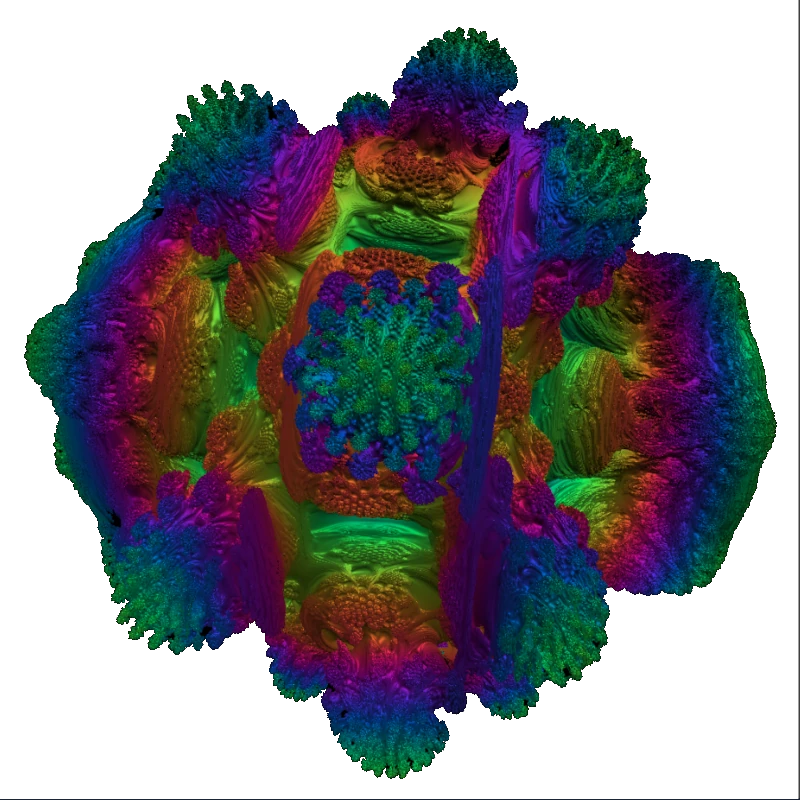
Entry volumetric shader scene

Orbit a compact implicit surface rendered with ray-style stepping in the fragment stage—friendly on more GPUs while still showing how volume-like shading scales.

What this lighter volumetric path shows

  • Implicit surface shaded with dynamic lighting inside the shader
  • Tiered kernel and step counts so phones can start low
  • Live FPS and frame-time readouts
  • WebGL 1–friendly GLSL for broader hardware reach
  • Mouse and touch camera controls for desktop or mobile
Run entry volumetric test

Shaders & volumetrics

Advanced volumetric benchmark

A deeper volumetric-style workload with timed segments, geometry detail, and effect stacks—the page many users seek when they want a heavy GPU shader examination on PC or Android.

Heavier volumetric / BM-style stress

  • Longer timed runs with stability and resolution reporting
  • Sliders for geometric complexity and post-style effect load
  • WebGL 2 feature set for modern browsers
  • Useful for comparing desktop cards and flagship phones under sustained load
  • Pairs well with the entry volumetric test for before/after tuning
Run advanced volumetric benchmark

Stress

Sustained GPU overload

Layered shader passes and iteration controls meant to hold the graphics pipeline busy—watch for thermal sag on compact devices.

Stress session overview

  • Configurable duration blocks
  • Shader weight presets from mild to extreme
  • Iteration multiplier for extra per-frame work
  • Live stability percentage alongside FPS
  • Rough shader-memory estimate for context
Open GPU stress run

Visualization

Animated field visualization

A distinct fullscreen fragment animation—polar waves, palette sweeps, and harmonic stacks—not the same code path as the volumetric implicit-surface tests.

Visualization workload notes

  • Quality presets stack outer layers and inner micro-samples
  • Effect presets add long harmonic and warp loops
  • Reports load index, resolution, and stability
  • Ideal when you want a non-volumetric shader torture pattern
  • Complements volumetric pages for a fuller GPU picture
Run field visualization

Particles

Swarm particles

Thousands of simulated points with forces rendered as GPU sprites—CPU integration meets fragment cost as counts climb.

Particle benchmark facts

  • Adjustable population up to tens of thousands
  • Tiered physics substeps and forces
  • Sprite shading scales with the chosen tier
  • Shows estimated buffer footprint
  • Good for spotting mobile CPU/GPU balance issues
Launch particle test

Memory & bandwidth

Texture bandwidth pressure

Large RGBA allocations plus chained dependent samples per frame—VRAM size and sampling throughput both matter.

Texture-heavy pass summary

  • Eight high-resolution textures resident at once
  • Dozens of fullscreen passes per frame with layered reads
  • Configurable resolution and active layer count
  • Timed window with automatic results capture
  • Highlights bandwidth-bound GPUs quickly
Run texture pressure test

Compute

Parallel numeric kernel (WebGL 2)

Fullscreen fragment kernels emulate dense compute: every pixel runs the same dependent math loop—requires WebGL 2.

Compute-style fragment kernel

  • Outer iteration slider scales work per pixel
  • Choose half (mediump) or single (highp) precision
  • Estimates scalar operations per frame
  • Shows backend string and framebuffer size
  • No WebGL 1 fallback by design
Start parallel math test

Rendering

SDF ray march (shader RT, not API RT)

Signed-distance ray marching in GLSL with many fullscreen redraws per frame—measures classic GPU ray stepping, not hardware ray tracing APIs.

Ray-march benchmark

  • Dense primitive field with floor and sky contribution
  • Adjustable march-step cap per segment
  • Optional reflection segments (bounce depth)
  • Multi-pass per frame multiplies fragment cost
  • Clear labeling that this is shader-based marching
Open SDF march test

Simulation

2D physics + heavy point shading

JavaScript circle solver paired with repeated point draws and a long fragment program—loads CPU and GPU together.

Hybrid simulation notes

  • Pairwise collision passes scale with body count tier
  • Substep control increases integration depth
  • Sixteen GPU point passes per frame
  • Fragment shader contains hundreds of dependent trig ops
  • Exposes main-thread bottlenecks vs fill limits
Run physics hybrid test

Compute

Multi-pass numeric stress

Additional chained GPU passes with configurable depth and timed segments—another angle on sustained parallel math in the browser.

Advanced pass stack

  • Pass count slider widens or narrows the pipeline
  • Timed segments for repeatable sessions
  • FPS and status surfaced during the run
  • Complements the primary WebGL 2 kernel page
  • Best on recent desktop and high-end mobile GPUs
Start advanced compute-style run

Please read first